
Edibles
Cannabis Edibles
Cannabis edibles are cannabis products designed to be consumed rather than inhaled. Edibles can come in many forms, including gummies, baked goods, beverages, chocolates, capsules, and other formulations.
Cannabis edibles can differ in their cannabinoid content, ingredients, serving information, formulation, and onset and duration characteristics. Product labeling and regulations also vary depending on where the product is sold.
Browse the available cannabis edibles below and use this guide to understand common edible terminology, product information, cannabinoids, labeling, and other important considerations.
Important: Cannabis laws, age requirements, product availability, and purchasing rules vary by jurisdiction. Always follow the laws that apply to your location.
What Are Cannabis Edibles?
Cannabis edibles are products that contain cannabis compounds and are intended to be consumed. Unlike inhaled cannabis products, edibles pass through the digestive system before their effects are experienced.
The term “edible” can refer to many different product formats, and the specific ingredients and cannabinoid content can vary substantially between products.
Common Types of Cannabis Edibles
Cannabis Gummies
Gummies are one of the most recognizable cannabis edible formats. They can contain THC, CBD, or other cannabinoids depending on the product formulation.
Cannabis Chocolates
Cannabis-infused chocolate products combine a chocolate-based food product with a cannabis formulation. Product ingredients and cannabinoid content vary between products.
Infused Beverages
Cannabis beverages are drinks containing cannabis compounds. They may be formulated using different cannabinoids and can vary in serving size and ingredients.
Baked Goods
Cannabis-infused baked goods can include products such as cookies, brownies, and other food products. Always check the product label for cannabinoid content and serving information.
THC vs. CBD in Edibles
THC and CBD are two of the best-known cannabinoids found in cannabis. An edible may contain THC, CBD, a combination of cannabinoids, or another formulation depending on the product.
THC is the cannabinoid primarily associated with the intoxicating effects of cannabis, while CBD is not generally considered intoxicating in the same way. However, cannabis products can contain multiple cannabinoids and their formulations vary.
The most reliable way to understand a particular product is to check its labeling and available laboratory information.
Learn more about cannabinoids in our THC vs. CBD guide.
How Cannabis Edibles Differ From Inhaled Cannabis
Edibles and inhaled cannabis products are processed differently by the body. When cannabis is consumed as an edible, the cannabinoids pass through the digestive system before entering circulation.
Because of this difference, edible products can have a different onset and duration profile compared with inhaled cannabis products.
The timing and intensity of effects can vary significantly between individuals and products.
Learn more about laboratory testing and product documentation in our complete Cannabis COA guide.
Understanding Edible Labels
Cannabis edible labels can include important product information. The exact labeling requirements depend on the jurisdiction.
Depending on the product, look for information such as:
- Product name
- Total product weight
- Total cannabinoid content
- Serving information
- Ingredients
- THC content
- CBD content
- Batch or lot information
- Testing information where applicable
- Manufacturer or producer information
Understanding Serving Information
Edible packaging may provide information about the amount of cannabis contained in an individual serving and the total amount contained in the package.
These numbers are not necessarily the same.
For example, a package can contain multiple individual pieces, with the label providing information about both the amount per serving and the total amount in the package.
Always read the complete product label rather than relying only on the number printed on the front of the package.
Why Edible Products Can Take Time to Produce Effects
Unlike inhaled cannabis, edible cannabis products must pass through the digestive system before their cannabinoids enter circulation.
As a result, the onset of effects can take longer than with inhaled cannabis. The timing can vary depending on the individual, product formulation, food consumed, and other factors.
Because onset can be delayed, consumers should follow the product label and applicable local regulations rather than assuming that an edible will work immediately.
How Long Do Cannabis Edibles Last?
The duration of effects from cannabis edibles varies from person to person. Factors can include the product formulation, cannabinoid content, individual metabolism, food consumption, and other variables.
There is no single duration that applies to every cannabis edible.
What Is a Cannabis Edible COA?
A Certificate of Analysis, or COA, is a laboratory report that can provide testing information about a cannabis product.
Depending on the product and jurisdiction, laboratory testing may provide information about cannabinoids and certain contaminants or other testing categories.
Learn more in our guide: What Is a Cannabis COA? .
How to Compare Cannabis Edibles
When comparing cannabis edible products, consider more than the product name or packaging.
- Review the cannabinoid information.
- Check serving and package information.
- Read the ingredient list.
- Check the product’s testing information where available.
- Look at the batch or lot information.
- Consider the product format.
- Check the manufacturer’s information.
- Verify that the product is legally sold in your jurisdiction.
How to Store Cannabis Edibles
Follow the manufacturer’s storage instructions for cannabis edible products. Storage conditions can affect food quality and product stability.
Cannabis products should also be kept securely away from children, pets, and anyone who should not have access to them.
Always follow applicable local requirements for cannabis product storage.
Explore Cannabis Edibles
Browse the cannabis edible products below. Product availability, pricing, ingredients, formulations, and product information may change over time. Always review the current product label before making a purchase.
Frequently Asked Questions
What are cannabis edibles?
Cannabis edibles are food, beverages, or other consumable products containing cannabis compounds. They can contain THC, CBD, or other cannabinoids depending on the formulation.
What is the difference between THC and CBD edibles?
THC and CBD are different cannabinoids. THC is associated with the intoxicating effects of cannabis, while CBD is not generally intoxicating in the same way. Always check the product label to determine which cannabinoids are present.
How long do cannabis edibles take to work?
Edibles generally have a slower onset than inhaled cannabis because they are processed through the digestive system. Timing varies between individuals and products.
How long do cannabis edibles last?
The duration varies depending on the individual, product formulation, cannabinoid content, metabolism, and other factors. There is no universal duration for every edible.
How do I read a cannabis edible label?
Check the product’s cannabinoid information, serving information, total package content, ingredients, batch information, testing information where available, and manufacturer information.
What is a cannabis edible COA?
A COA, or Certificate of Analysis, is a laboratory report containing testing information about a cannabis product. The information provided can vary by product and jurisdiction.
How should cannabis edibles be stored?
Follow the manufacturer’s storage instructions and applicable regulations. Cannabis edibles should be stored securely away from children, pets, and anyone who should not have access to them.
Related Cannabis Resources
- Cannabis Flower
- Cannabis Vape Cartridges
- Cannabis Pre-Rolls
- Top Shelf Cannabis
- THC vs. CBD in Cannabis Products
- Cannabis Terpenes Explained
- What Is a Cannabis COA?
- Cannabis Education Hub
Cannabis laws and regulations vary by jurisdiction and can change over time. This information is provided for general educational purposes and is not medical or legal advice. Always follow the laws applicable to your location.
Showing all 21 results
-
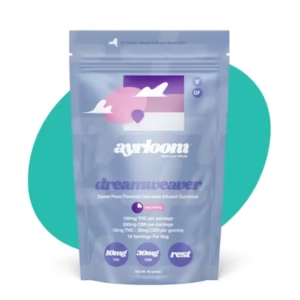
Ayrloom Edible – Dreamweaver Sweet Plum 3:1 (CBN:THC) – 100 mg
Price range: $60 through $1 000Select options This product has multiple variants. The options may be chosen on the product pageClear3 packs5 packs10 packs100 packs -
Bettering Company Edible 100 mg – Pink Lemonade
Price range: $75 through $1 000Select options This product has multiple variants. The options may be chosen on the product pageClear3 packs5 packs10 packs100 packs -
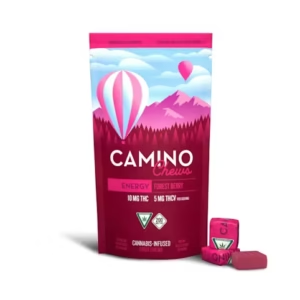
Camino Chews – 100mg Edible – Forest Berry
Price range: $75 through $1 000Select options This product has multiple variants. The options may be chosen on the product pageClear3 packs5 packs10 packs100 packs -
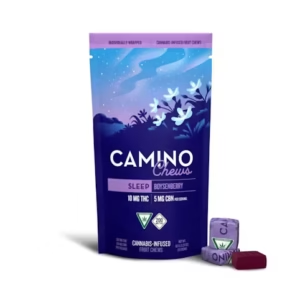
Camino Chews – Boysenberry (THC10MG – CBN5MG – CBG5MG) – 100mg Edible
Price range: $75 through $1 000Select options This product has multiple variants. The options may be chosen on the product pageClear3 packs5 packs10 packs100 packs -
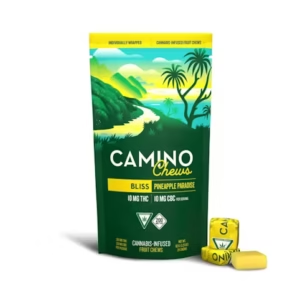
Camino Gummies – Pineapple Paradise “Bliss” (THC10MG/CBC10MG) – 100mg Edible
Price range: $75 through $1 000Select options This product has multiple variants. The options may be chosen on the product pageClear3 packs5 packs10 packs100 packs -
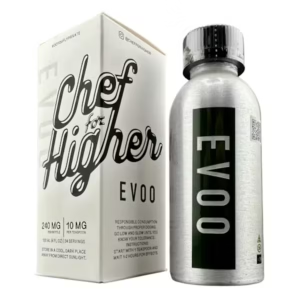
Chef for Higher Edible – Extra Virgin Olive Oil – 240mg
Price range: $120 through $2 500Select options This product has multiple variants. The options may be chosen on the product pageClear3 packs5 packs10 packs100 packs -
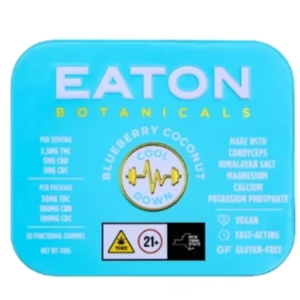
EATON Edible – Cool Down – 100 mg
Price range: $75 through $1 000Select options This product has multiple variants. The options may be chosen on the product pageClear3 packs5 packs10 packs100 packs -
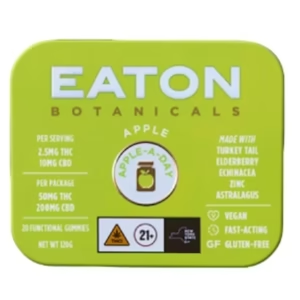
EATON Edible 100 mg – Apple-A-Day
Price range: $75 through $1 000Select options This product has multiple variants. The options may be chosen on the product pageClear3 packs5 packs10 packs100 packs -
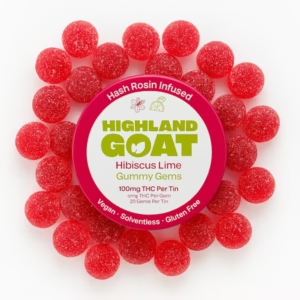
Highland Goat – Hibiscus Lime – Hash Rosin Infused – 100mg Edible
Price range: $90 through $1 000Select options This product has multiple variants. The options may be chosen on the product pageClear3 packs5 packs10 packs100 packs -
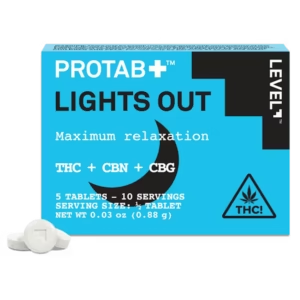
Level Edible – Protab+ Lights Out 5pk – 100mg
Price range: $75 through $1 000Select options This product has multiple variants. The options may be chosen on the product pageClear3 packs5 packs10 packs100 packs -
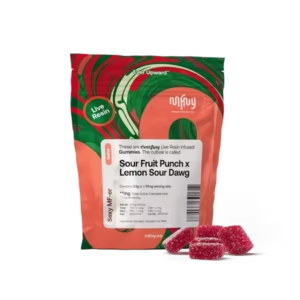
MFNY 100mg Edible – Sour Fruit Punch x Lemon Sour Dawg
Price range: $60 through $1 000Select options This product has multiple variants. The options may be chosen on the product pageClear3 packs5 packs10 packs100 packs -
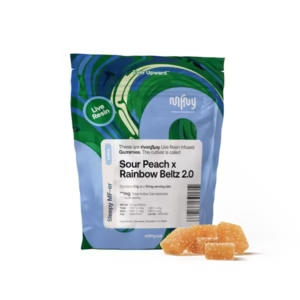
MFNY Edible – Sour Peach x Rainbow Beltz 2.0 Live Rosin – 100 mg
Price range: $75 through $1 000Select options This product has multiple variants. The options may be chosen on the product pageClear3 packs5 packs10 packs100 packs -
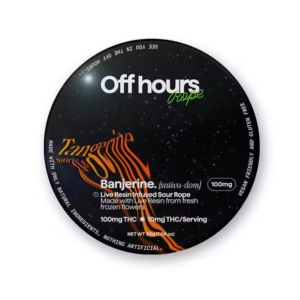
OFFHOURS – Banjerine -Tangerine Sunrise – Live Resin Rope – 100 mg Edible
Price range: $60 through $800Select options This product has multiple variants. The options may be chosen on the product pageClear3 packs5 packs10 packs100 packs -

OFFHOURS Edible – Gelonade Sour Raspberry Lemonade Live Resin Rope – 100mg
Price range: $60 through $900Select options This product has multiple variants. The options may be chosen on the product pageClear3 packs5 packs10 packs100 packs -
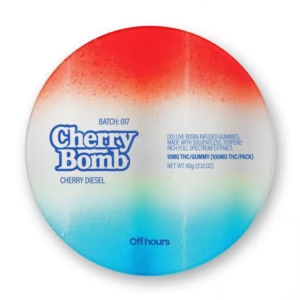
OFFHOURS Gummies – Cherry Diesel “Cherry Bomb” Live Rosin – 100mg Edible
Price range: $90 through $1 000Select options This product has multiple variants. The options may be chosen on the product pageClear3 packs5 packs10 packs100 packs -
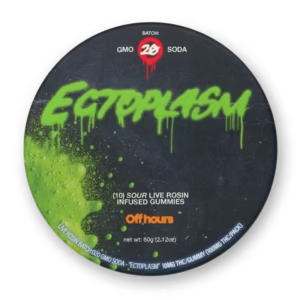
OFFHOURS Gummies – GMO Soda “Ectoplasm” Live Rosin – 100mg Edible
Price range: $90 through $1 000Select options This product has multiple variants. The options may be chosen on the product pageClear3 packs5 packs10 packs100 packs -
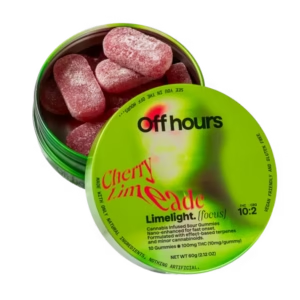
OFFHOURS Gummies – Limelight – 100 mg
Price range: $60 through $1 000Select options This product has multiple variants. The options may be chosen on the product pageClear3 packs5 packs10 packs100 packs -
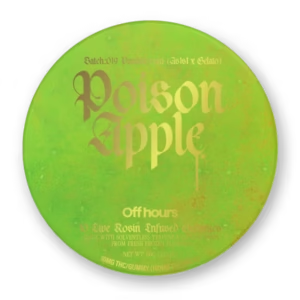
OFFHOURS Gummies – Pandalorian “Poison Apple” Live Rosin – 100mg Edible
Price range: $90 through $1 000Select options This product has multiple variants. The options may be chosen on the product pageClear3 packs5 packs10 packs100 packs -
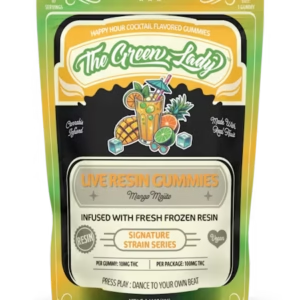
The Green Lady Gummies – Mango Mojito (Live Resin) – 100mg Edible
Price range: $90 through $1 000Select options This product has multiple variants. The options may be chosen on the product pageClear3 packs5 packs10 packs100 packs -
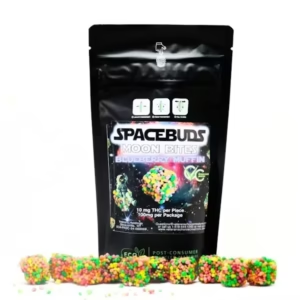
Veterans Choice 100mg Edible – Spacebuds – Moon Bites “Blueberry Muffin” Live Rosin
Price range: $60 through $1 000Select options This product has multiple variants. The options may be chosen on the product pageClear3 packs5 packs10 packs100 packs -
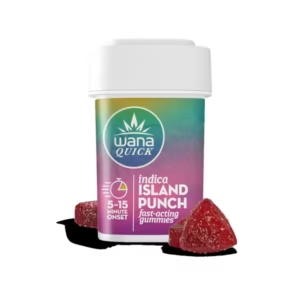
Wana Edible – Quick Island Punch – 100 mg
Price range: $60 through $1 000Select options This product has multiple variants. The options may be chosen on the product pageClear3 packs5 packs10 packs100 packs